Shipyards 2040
The shipbuilding industry as a strategic capability and national security backbone.
Join us in creating a secure space for national strategy and resilience.
ARMA Forum is a strategic space for dialogue between government, the armed forces, the defence industry, the energy sector and the research community. Two days of intensive debate focused on a single question: how should Poland build its capabilities for the decade ahead?
Across fourteen panels, practitioners and decision-makers responsible for the key areas of national security will gather — from shipyards and the Polish Navy, through artificial intelligence and unmanned systems, to nuclear energy, critical maritime infrastructure and the workforce of the future.
The forum's goal is to translate strategies into tangible operational, investment and industrial capabilities — in an environment of growing geopolitical pressure and uncertainty.
From maritime strategy and the shipbuilding industry, through unmanned systems and artificial intelligence, to nuclear energy and critical infrastructure resilience. Full panel descriptions are in the agenda below.
The shipbuilding industry as a strategic capability and national security backbone.
National strategy in a world of growing pressure and uncertainty.
The capabilities that will determine security.
Pressure, asymmetry and below-threshold conflicts.
From research and innovation to real defence capabilities.
From data analysis to combat decision-making in the security system.
A new tool for maritime security and deterrence.
National security, nuclear power and system resilience.
Securing maritime and energy installations.
Ports, terminals, cables and pipelines.
The resource and industrial base of national security.
People, competencies and responsibility for security.
How to build real national capabilities.
Nuclear energy and nuclear deterrence in the national security dimension.
Click on a panel to expand its description. The final order of sessions and speaker list will be announced closer to the event.
The opening panel dedicated to the long-term role of the shipbuilding industry as a cornerstone of national security. Discussion will focus on designing and developing production and repair capabilities that support the economy in peacetime and provide real support for the armed forces in crisis and wartime.
Particular emphasis will be placed on industrial sovereignty, the ability to rapidly scale production, technology transfer and supply chain resilience. The panel will also address the role of the state in building a stable and predictable industrial ecosystem.
A strategic panel on the role of the maritime domain in the national security system. At the centre of discussion is the question of how Poland should design its maritime strategy amid intensifying geopolitical rivalry and uncertainty.
Topics will include the protection of communication routes, critical infrastructure and economic sovereignty, as well as the need to integrate government, military, industry and academia.
A panel on the future shape of the Polish Navy and the key operational capabilities required through 2040.
Discussion will cover the integration of modern platforms, weapon systems, information technologies and unmanned systems. Particular attention will be given to the Navy's cooperation with domestic industry and academia as a prerequisite for effective modernisation and combat readiness.
A panel examining the changing nature of conflict in the maritime domain, including asymmetric operations, hybrid pressure and activities conducted below the formal threshold of war.
Discussion will focus on the implications for defence planning and the role of the military, industry and government in responding to new types of threats.
A panel on the collaboration of science, industry and the armed forces as the foundation of a modern security system.
Participants will discuss the effective translation of research and development projects into real operational capabilities, and the identification of organisational, financial and legal barriers limiting this process.
A panel on the role of artificial intelligence as one of the key factors transforming the national security system.
Discussion will cover the use of algorithms in data analysis, command support, battlefield management and the integration of manned and unmanned systems. Issues of data security, accountability and the resilience of AI-based systems will also be addressed.
A panel on the growing role of unmanned systems — aerial, surface and subsurface — in military and civilian operations.
Discussion will focus on their applications in reconnaissance, infrastructure protection and threat response, as well as their integration with existing security systems.
A panel on the energy sector as a foundation of national security. Particular attention will be given to the development of nuclear energy as an element of building energy sovereignty and resilience to geopolitical pressure.
Discussion will cover the role of energy in ensuring continuity of critical infrastructure, the armed forces and the defence industry. Issues of energy infrastructure protection, including nuclear power plants, and system resilience to kinetic and cyber threats will also be addressed.
A panel on the protection of offshore installations, including wind farms and energy infrastructure.
Discussion will cover hybrid threats, sabotage, monitoring and cooperation between the military, operators and government, as well as the integration of offshore assets with the national energy security system.
A panel focused on the protection of key elements of critical infrastructure in the maritime domain.
Topics will include monitoring, crisis response, cybersecurity and the coordination of activities among institutions responsible for national security.
A panel on the importance of the resource and logistics base for a state's ability to sustain prolonged operations in crisis and conflict.
Discussion will cover supply security, logistics chain resilience and the role of fuels and energy carriers — including LNG and nuclear fuel — in ensuring continuity of state operations.
A panel on the challenges of building competencies for the maritime, defence and technology sectors.
Topics will include the role of education, training programmes and industry cooperation in shaping a workforce capable of operating in an increasingly complex security environment.
The forum's closing panel, integrating conclusions from all debates.
Discussion will focus on how to effectively translate strategies and documents into concrete actions, investments and capabilities that genuinely enhance national resilience and security.
The final panel of ARMA Forum, dedicated to the role of nuclear energy in the national security system — in its energy, industrial and strategic dimensions.
Discussion will focus on how the nuclear energy programme affects long-term state sovereignty, economic stability and resilience to geopolitical pressure. Particular attention will be given to the links between the civilian use of nuclear technologies and the development of strategically significant competencies and capabilities.
The panel will also address the security of nuclear infrastructure, including its physical and cyber protection, and the role of the state in managing one of the most sensitive areas of critical infrastructure.
Participants will also consider how the growth of the nuclear sector impacts industry, supply chains, technological development and workforce competencies, and what place it should occupy in Poland's long-term security strategy.
The panel will serve as the forum's summary, weaving together the threads of security, energy, industry and state capability into one coherent strategic perspective.
An event organised in cooperation with public, local-government and business partners, together with local labour-market and education institutions.
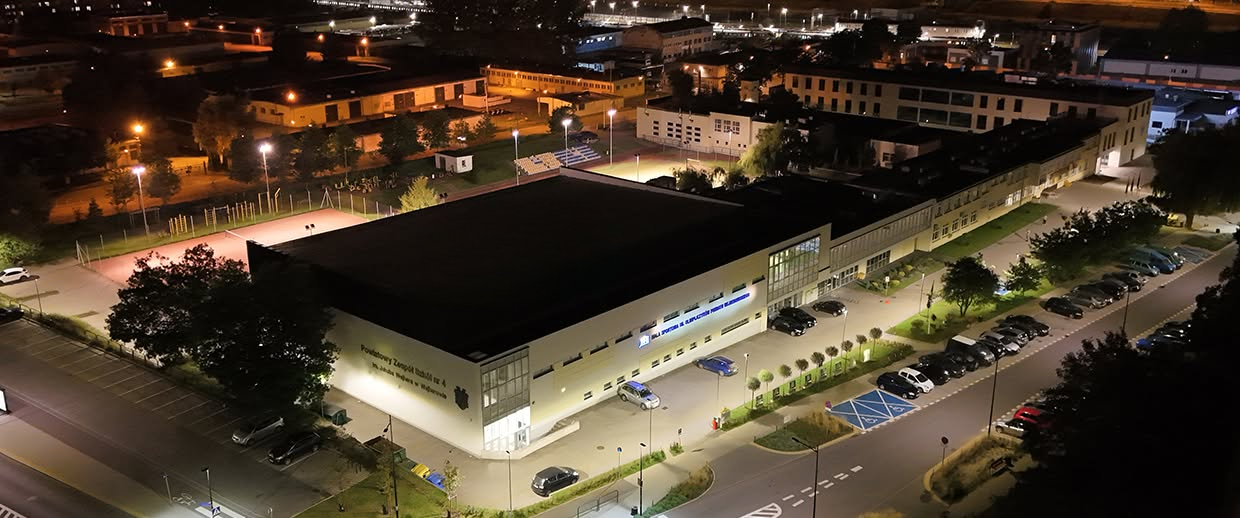
ZOP Kaszubia
Panels, exhibitions, demonstrations and B2B meetings in one place — in the heart of the Tri-City metropolitan area.
Alongside ARMA Forum, indoors and outdoors, three fair zones operate — integrating industry, the labour market and innovation.
The event is open to a range of forms of involvement — from industry exhibitor to strategic sponsor of the entire forum.
A stand in one of the three fair zones (defence, work & education, innovation) — indoors or outdoors.
Participation in 1–14 strategic panels — as a content partner or panel co-host.
Sponsorship of the heavy-equipment exhibition or dynamic technology demonstrations (drones, communications, services).
Media or industry patronage — with a dedicated promotional package across the KPH Group portfolio and partners.
Registration is now open. A confirmation of participation will be sent to the e-mail address you provide.
Go to registration